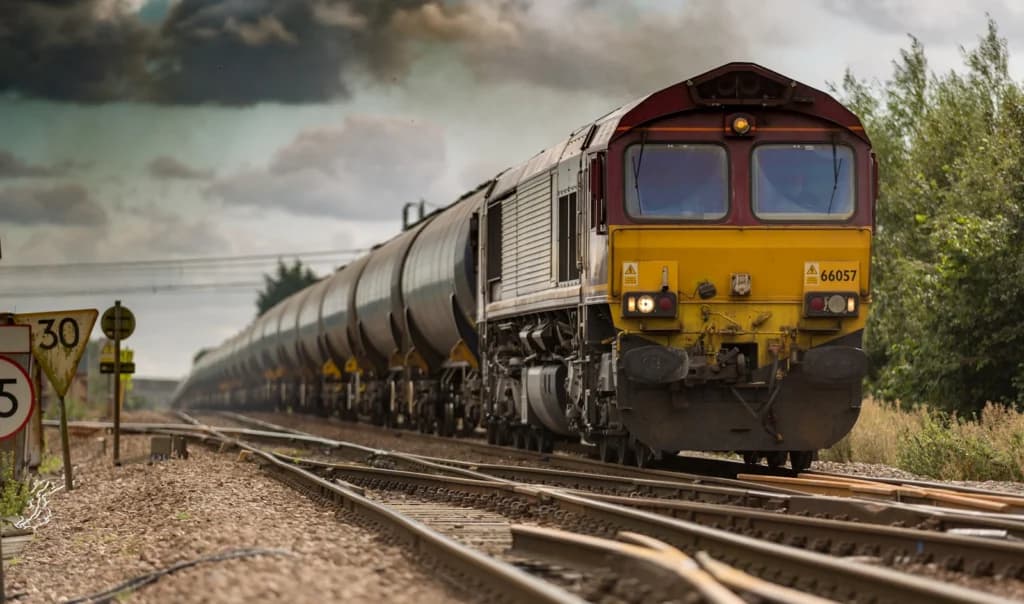
A career in Indian Railways( RRB JE Recruitment 2026) continues to hold strong appeal for engineering graduates and diploma holders across the country, largely because it combines job stability with structured career progression. The Railway Recruitment Board has now opened one of its most closely watched hiring cycles of the year, inviting applications for Junior Engineer, Depot Material Superintendent, and Chemical & Metallurgical Assistant roles. With 4,098 positions on offer, this recruitment drive under CEN No. 04/2026 gives technically qualified candidates a genuine shot at joining one of the largest employers in the country. This article breaks down every practical detail you need — from eligibility and pay to the exact steps for submitting your application — written specifically to help you understand the opportunity clearly before you begin preparing your form.
Recruitment Overview Table of RRB JE Recruitment 2026
The Railway Recruitment Board (RRB JE Recruitment 2026) operates under the Ministry of Railways and is responsible for staffing technical and non-technical positions across Indian Railways’ zonal divisions. Rather than functioning as a single centralized body, RRB works through 21 regional boards spread across the country, each handling applications and examinations for its respective zone. This structure allows the organization to manage large-scale hiring drives such as this one, where thousands of applicants from different states apply for postings tied to specific railway zones. Given that Indian Railways is among the largest railway networks in the world, the technical departments it maintains — civil, electrical, mechanical, and signal & telecommunication — require a steady pipeline of qualified engineers, which is precisely what this recruitment cycle is designed to address.
Key Highlights
This cycle brings together three distinct technical posts under one centralized notice, widening the pool of eligible candidates.
The vacancy count of 4,098 makes it one of the more substantial JE-focused hiring rounds in recent years.
Positions are spread across engineering disciplines including Civil, Electrical, Mechanical, Signal & Telecommunication, and Stores.
The pay structure places successful candidates at Level 6 of the 7th Pay Commission matrix, a respectable entry point for technical government roles.
The selection process follows the same two-stage computer-based testing format RRB has used in earlier JE cycles, followed by document checks and a medical fitness test.
Vacancy Details
RRB has indicated that the 4,098 approved vacancies will be filled across the JE, DMS, and CMA categories, with the bulk of positions concentrated in Junior Engineer roles. Based on the vacancy pattern shared through the short notice, Civil Engineering accounts for the largest share of openings, followed by Electrical and Mechanical disciplines. Within the Junior Engineer category itself, the P.Way (Permanent Way) specialization carries the highest sanctioned strength, with Works and Carriage & Wagon specializations following behind. It is worth noting that RRB typically publishes the complete post-wise and region-wise vacancy breakup only in the detailed CEN document, so candidates should treat the short-notice figures as an initial indication and confirm exact numbers once the full notification is published.
Since railway recruitment vacancies are allotted zone-wise, the number of openings can vary depending on which RRB region a candidate applies through. Aspirants preparing their applications should review the zone-wise vacancy chart carefully, particularly if they intend to apply through a specific state or region where they have residency preference or examination convenience.
Eligibility Criteria
Qualification
Eligibility requirements differ slightly by post, since each role demands a distinct technical background.
Junior Engineer (JE): A three-year diploma in the relevant engineering discipline from a recognized institution is the standard minimum requirement. Candidates holding a higher qualification, such as a B.E. or B.Tech in a matching discipline, are also considered eligible, since a degree is treated as equivalent to or higher than the diploma requirement.
Depot Material Superintendent (DMS): This role calls for a technical or engineering qualification aligned with materials management and store-related functions, as specified in the detailed notification.
Chemical & Metallurgical Assistant (CMA): Candidates need a background in Chemistry, Metallurgy, or a closely related science discipline, generally at the graduate level.
Applicants are strongly advised to cross-check the exact qualification codes listed against each post once the detailed CEN is published, since RRB assigns specific discipline codes that must match a candidate’s certificates precisely.
Age Limit
The prescribed age band for this recruitment is 18 to 33 years, calculated as on 1 January 2027. This means candidates born within a defined range will meet the basic age criterion, though the board also permits age relaxation for reserved categories — including SC/ST, OBC, persons with disabilities, and other groups specified under government recruitment rules. Candidates falling into these categories should refer to the standard relaxation table published by RRB to calculate their adjusted upper age limit accurately.
Experience
This recruitment does not require prior work experience for entry-level Junior Engineer, DMS, or CMA positions. It is structured as a fresh-hire pathway for diploma and degree holders, meaning candidates straight out of their qualifying course can apply, provided they meet the age and educational criteria.
Salary Structure
Selected candidates will be placed at Pay Level 6 of the 7th Central Pay Commission matrix, which carries a starting basic pay of ₹35,400 per month. Beyond this basic pay, employees are entitled to standard railway allowances such as Dearness Allowance, House Rent Allowance, and Travel Allowance, calculated as per prevailing government norms and the employee’s posting location. Over time, pay progresses through periodic increments and promotional avenues available within Indian Railways’ internal cadre structure, making this a role with long-term earning growth rather than a fixed, static salary.
Application Fee
The fee structure for this recruitment follows RRB’s standard category-based model:
General, OBC, and EWS candidates: ₹500, of which ₹400 is refunded after the candidate appears for CBT-I.
SC, ST, Ex-Servicemen, PwBD, Female, Transgender, Minority, and Economically Backward Class candidates: ₹250, which is fully refundable once the candidate appears for CBT-I.
Fee payment must be completed online through net banking, debit card, credit card, or UPI, and candidates should retain the payment confirmation for their records. It is important to complete the application and fee payment within the notified window, since RRB has historically not entertained fee-related grievances raised after the closing date.
Selection Process
The recruitment follows a four-stage selection method that RRB has consistently used for JE-category hiring:
Computer Based Test – I (CBT-I): A screening-level test comprising 100 questions worth 100 marks, to be completed within 90 minutes. This stage typically narrows down the applicant pool for the next round.
Computer Based Test – II (CBT-II): A more detailed and technically focused exam with 150 questions carrying 150 marks, conducted over 120 minutes. This stage places greater weight on subject-specific and technical knowledge relevant to the applied post.
Document Verification (DV): Candidates who clear both computer-based tests are called for verification of their educational certificates, identity proof, category certificates, and other supporting documents.
Medical Examination: A mandatory fitness test conducted as per railway medical standards applicable to the specific post, since certain technical roles require particular physical and visual fitness criteria.
Both CBT stages carry a negative marking provision, where one-third of a mark is deducted for every incorrect answer, so candidates should approach objective-type questions with a measured, accuracy-first strategy rather than attempting every question indiscriminately.
Important Dates
Event
Date
Short Notice Release
21 July 2026
Detailed Notification Release
13 August 2026
Online Application Begins
14 August 2026
Online Application Closes
13 September 2026
Last Date for Fee Payment
15 September 2026
Candidates should treat these dates as per the currently released notice and continue checking the official RRB portal for any region-specific updates, since exact timelines can occasionally be adjusted by individual RRB zones.
Required Documents
Before starting the online application, it helps to keep the following documents ready in scanned digital format:
A recent passport-size photograph meeting RRB’s specified dimensions
Scanned signature in the prescribed format
Educational certificates and mark sheets relevant to the applied post
A valid photo identity proof, such as Aadhaar card, PAN card, or voter ID
Category certificate, if applying under SC/ST/OBC/EWS/PwBD reservation
Date of birth proof, typically a Class 10 certificate
Any additional certificate specified in the detailed CEN, such as a domicile or Ex-Servicemen certificate, where applicable
Step-by-Step Application Process
1
Visit the official RRB application portal at rrbapply.gov.in.
2
Locate the notification link for CEN 04/2026 relating to Junior Engineer and allied posts.
3
Register as a new user by providing basic personal details and creating login credentials, including a password that meets the site's security requirements.
4
Complete Aadhaar-based verification and fill in your contact information.
5
Log in using your newly created account and begin the application form.
6
Enter your educational qualifications, category details, and preferred RRB zone carefully.
7
Upload your photograph, signature, and other required documents in the specified format and file size.
8
Review the completed form thoroughly before submission, since most fields cannot be edited after final submission.
9
Pay the applicable application fee through the available online payment options.
10
Download and save the confirmation page or application printout for future reference.
Why Candidates Should Consider This Opportunity
For engineering diploma holders and graduates evaluating their next career move, this recruitment offers a few practical advantages worth weighing. First, government railway positions in India are known for long-term job stability, something that continues to matter to many applicants weighing public versus private-sector paths. Second, the technical nature of JE, DMS, and CMA roles means the work directly applies classroom and lab knowledge to real infrastructure and operations, which many engineering graduates find more relevant than administrative postings. Third, Indian Railways maintains a defined internal promotion structure, so entry at this level is not necessarily a ceiling but a starting point within a larger departmental hierarchy. Finally, because this drive spans multiple zones and disciplines, candidates from various parts of the country and various engineering backgrounds have a realistic chance of finding a matching post rather than competing for a single narrow category.
Common Mistakes Applicants Make
Even well-qualified candidates sometimes lose out due to avoidable errors during the application stage. Some of the more frequent ones include:
Selecting the wrong RRB zone without checking regional vacancy distribution, which can affect both competition levels and exam center convenience.
Uploading photographs or signatures that do not match the file size or dimension guidelines, leading to application rejection.
Entering educational qualification details that do not precisely match the discipline code required for the applied post.
Missing the fee payment deadline after completing the form, which can invalidate an otherwise correctly filled application.
Applying to multiple RRB zones under different applications, a practice RRB explicitly disallows and treats as grounds for rejecting all such applications.
Ignoring category certificate formatting requirements, resulting in verification issues later in the process.
Reviewing the detailed CEN document line by line before starting the form is the simplest way to avoid most of these pitfalls.
Preparation Tips
Candidates preparing for CBT-I and CBT-II should build their study plan around the officially notified exam pattern rather than relying solely on guesswork. A few practical suggestions:
Start with a clear understanding of the syllabus for both general awareness/aptitude sections and the technical subjects relevant to your discipline.
Practice previous years’ RRB JE question papers to get familiar with the difficulty level and question framing style.
Since negative marking applies, build a habit of attempting only those questions you are reasonably confident about during timed practice sessions.
Allocate separate revision time for technical subjects, as CBT-II carries significantly more weight on discipline-specific knowledge compared to CBT-I.
Keep a tracker of your accuracy percentage during mock tests rather than only tracking the number of questions attempted, since accuracy directly affects your final score under the penalty system.
Stay updated on official announcements regarding exam city, admit card release, and any changes to the exam pattern by checking the RRB portal periodically.
A total of 4,098 vacancies have been announced for Junior Engineer, Depot Material Superintendent, and Chemical & Metallurgical Assistant posts under CEN No. 04/2026.
The recruitment is being conducted by the Railway Recruitment Board (RRB) under the Ministry of Railways, Government of India.
The online application window opens on 14 August 2026.
Candidates can submit their applications until 13 September 2026.
A three-year diploma in the relevant engineering discipline is the minimum requirement, though candidates with a matching B.E./B.Tech degree are also eligible.
Candidates must be between 18 and 33 years of age as on 1 January 2027, with relaxation available for reserved categories as per government norms.
General, OBC, and EWS candidates need to pay ₹500, of which ₹400 is refunded after appearing for CBT-I.
Yes, SC, ST, Ex-Servicemen, PwBD, Female, Transgender, Minority, and EBC candidates pay ₹250, which is fully refunded after they appear for CBT-I.
The process includes CBT-I, CBT-II, Document Verification, and a Medical Examination.
CBT-I consists of 100 questions for 100 marks in 90 minutes, while CBT-II has 150 questions for 150 marks in 120 minutes, with negative marking of one-third mark per wrong answer in both stages.
Selected candidates are placed at Pay Level 6 with a starting basic pay of ₹35,400 per month, along with applicable allowances.
No, candidates are permitted to apply to only one RRB zone through a single application. Applying to multiple zones can lead to rejection of all submitted applications.
Candidates can apply through rrbapply.gov.in or their respective regional RRB website.
No, this recruitment does not mandate prior work experience for JE, DMS, or CMA posts, making it accessible to fresh diploma and degree holders.
The complete post-wise and zone-wise vacancy distribution will be published in the detailed CEN document, expected to be released by RRB closer to the application start date.
The RRB JE Recruitment 2026 drive represents a meaningful opportunity for engineering diploma holders and graduates who are looking to build a technical career within Indian Railways. With 4,098 vacancies spread across Junior Engineer, Depot Material Superintendent, and Chemical & Metallurgical Assistant posts, the scale of this recruitment gives a wide base of candidates a realistic pathway into government service. As with any large-scale recruitment process, success depends on careful preparation — understanding the eligibility criteria thoroughly, filling the application form without errors, and following a structured study plan for the computer-based tests. Candidates are encouraged to keep checking the official RRB website regularly for the detailed notification, admit card releases, and any updates related to exam scheduling, so they remain fully informed at every stage of this recruitment cycle
Disclaimer: This article is based on publicly available information from the official RRB short notice and preliminary announcements. Candidates should verify all details, including exact dates, vacancy breakup, and eligibility conditions, from the detailed CEN No. 04/2026 notification on the official RRB website before applying.
Related Tags
Latest Govt JobsGet Job Update
Reviewed By
Get Job Update Editorial Team
Official Notification Verified
Official Link Verified
Published On14 August 2026
Last Updated14 Aug 2026
Join the Discussion
0 Comments
Loading comments...
Top Pick
Lucent General Knowledge (Latest Edition)
The universal reference book containing structured notes for History, Geography, Polity, Science, and Miscellaneous GK facts.